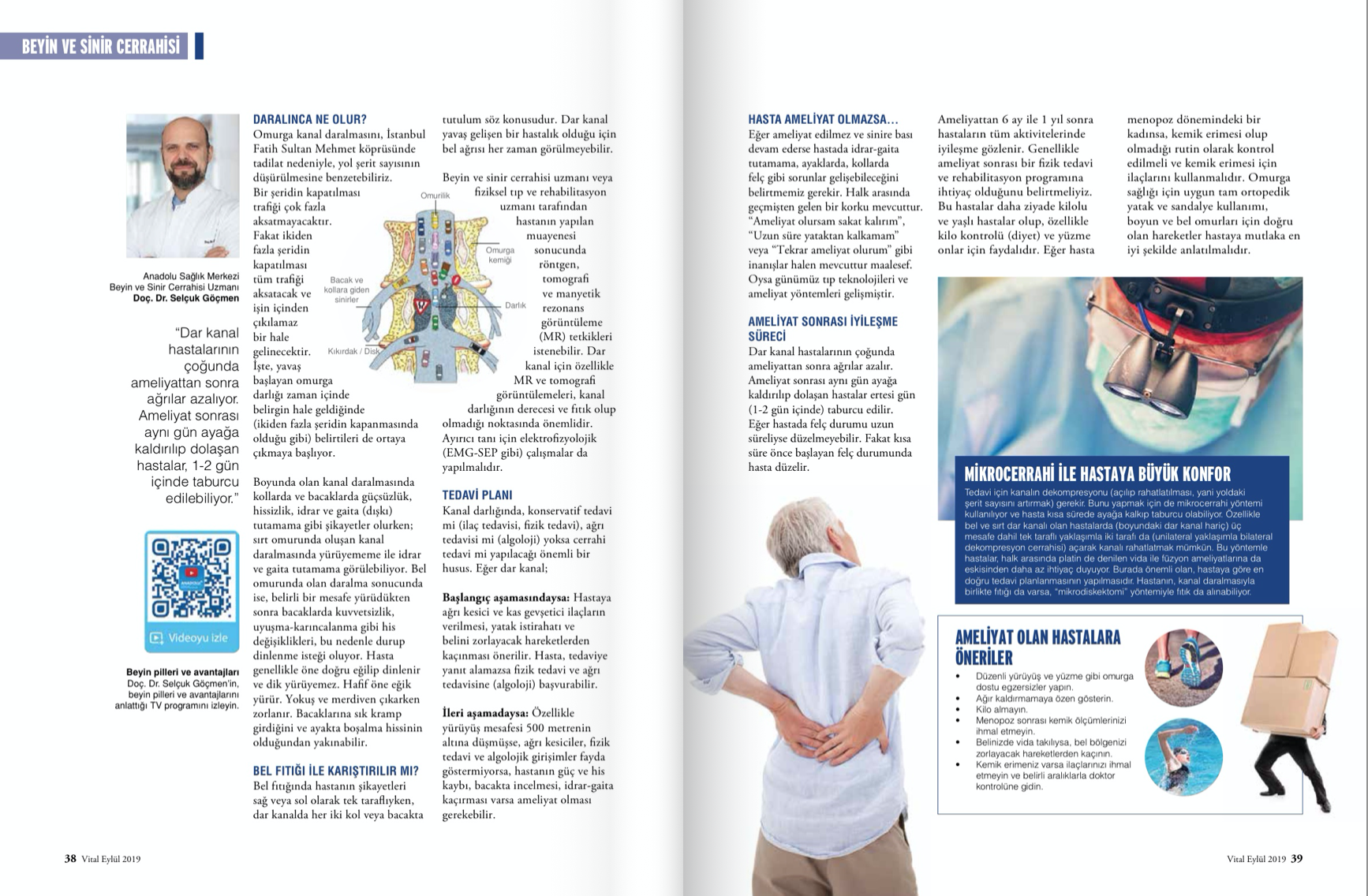
Microsurgery With Microsurgery Provides Patients Great Comfort
What happens when you get stuck?
Spinal canal stenosis is a disease caused by compression of the nerves passing through the spinal cord. Since the narrowing of the canal develops slowly, low back pain may not always be noticeable. Over time, pain, numbness and weakness may occur in the legs while walking.
A narrow channel can be thought of as a lane closure. Traffic can manage for a while, but when more than one lane is closed, the flow is severely disrupted. Similarly, as the narrowing of the spinal canal progresses, complaints increase.
Narrowing of the cervical spine can cause weakness and numbness in the arms and legs, as well as urinary and swallowing disorders. In the narrowing of the lumbar region, the walking distance is shortened, weakness and numbness in the legs may develop.
How is the diagnosis made?
After the patient's complaints and physical examination, diagnostic methods are used. In particular, magnetic resonance imaging (MRI) and tomography examinations are used to assess the degree of canal narrowing. Nerve conduction tests can also be performed if necessary.
Treatment plan
Treatment is planned according to the stage of the disease.
In the first phase
-
Painkillers and muscle relaxants
-
Physical therapy
-
Restriction of leisure activities
-
Avoid certain movements
At this stage, complaints can be controlled in some patients.
In advanced stage
Surgical treatment is indicated if the walking distance is significantly shortened and there are symptoms such as loss of strength, urinary or fecal incontinence.
If the patient does not have surgery…
Untreated, the disease can progress. Over time, serious problems such as inability to eat, paralysis, development of paralysis, urinary and fecal incontinence may occur. Therefore, surgery should not be delayed in appropriate patients.
Postoperative recovery
After spinal canal stenosis surgery, most patients experience rapid pain relief. Patients are usually ambulated the first day after surgery and discharged shortly afterward. Physical therapy and rehabilitation process supports recovery.
Greater patient comfort with microsurgery
Selçuk Göçmen states that thanks to advanced microsurgical techniques, spinal canal narrowing surgeries can be performed with smaller incisions and less tissue damage. With this method:
-
Less pain
-
Less blood loss
-
Shorter surgery time
-
Faster discharge
-
Shorter recovery time
can be obtained.
Guidance for patients undergoing surgery
-
Do activities that support the spine, such as regular walking and swimming
-
Avoid excessive weight gain
-
Avoid heavy lifting
-
Bone health should not be neglected after menopause
-
Those at risk of osteoporosis should be under regular control
-
Comply with the doctor's exercise and lifestyle guidelines