
Spine Fractures
A sudden onset of severe lower back, back or neck pain in patients may be a sign of a spinal fracture. Urgent medical attention should be sought!
Spinal fractures are serious injuries that occur when one or more parts of the spinal bones break. Such fractures can be caused by falls, traffic accidents, blows during sports activities, infections that weaken the bones (such as tuberculosis, brucellosis), cancers (cancer of the bone itself or metastases) or osteoporosis (osteoporosis).
“ “ Spinal fractures are serious conditions that often require urgent medical attention. In the treatment of spinal fractures, the aim is to preserve the functional integrity of the spine and the spinal cord and nerve cord. To relieve the nerves that are damaged due to compression in fractures from compression without paralyzing them and to support normal anatomical functional structure”
Who is it more common in?
Spine fractures due to osteoporosis are more common in women, especially after menopause, while spine fractures due to trauma are more common in men.
Fractures in the dorsal spine are usually caused by metastases or by the spinal bone itself.
Here are some important points to inform patients about spinal fractures:
- Symptoms: People with a spinal fracture may experience symptoms such as severe back, neck or lower back pain, limitation of movement, numbness, tingling or muscle weakness. In the case of a spinal cord injury, more serious consequences such as paralysis can occur.
- Immediate medical attention: If there is a suspicion of a spinal fracture, medical attention should be sought immediately. The fracture may have caused damage to the spinal cord, which requires immediate treatment.
- Diagnosis: The doctor diagnoses the spinal fracture by means of physical examination and imaging methods such as x-rays, computed tomography and magnetic resonance imaging (MRI). These imaging methods help to determine the type, location and severity of the fracture. Fractures are classified as comminution fractures, burst fractures and comminuted fractures. Depending on the type of fracture, further tests may be required. If the fracture is due to cancer, the patient should be referred to the oncology department and urgent PET-CT scanning of the whole body and blood tests called tümör markers should be performed. If the fracture is due to osteoporosis, görüntülements evaluating bone density (such as QCT, bone density ölçümümü) should be performed and endocrinology bölümümümüs calcium, vitamin düolives should be checked and treatment should be started immediately. In patients with suspected infection, urgent blood tests such as whole blood, sediment, CRP, procalcitonin, tuberculosis (tuberculosis), brucella should be requested.
- Treatment Options: Spinal fractures can be treated in different ways. These treatment options may vary depending on the type, location, severity and health status of the patient. The fracture can be treated conservatively (non-surgically) or surgically.
- Conservative Treatment: This usually involves the use of a cervical corset or neck brace for mild or stable fractures. The patient should rest (bed rest for about 3-4 weeks), use a corset or cervical collar to support the spine and sometimes physiotherapy may be required. Algologic treatment is important because the pain is very severe. Osteoporosis treatment should also be started in bone loss. In infectious fractures, the microorganism causing the disease should be identified and antibiotic treatment should be started rapidly. Hyperbaric oxygen therapy should be initiated if necessary.
- Surgical Treatment: Surgical intervention may be required for more complex fractures or spinal cord injuries.
- Biopsy: Biopsy can be performed in suspicious lesions, especially in tümörs. In infections, sampling can be performed by biopsy to detect the microorganism. If there is an abscess in the area adjacent to the bone, it can be aspirated by biopsy and sent to microbiology.
- Vertebroplasty and Kyphoplasty: These procedures are commonly known as bone grafting. It aims to stabilize fractures by filling the bones of the spine with a special mixture called cement like a dental filling. It is especially preferred in bone resorption conditions such as osteoporosis.
- Füzion Surgery: Stabilization surgery; also known colloquially as platinum or screw fixation. The fractured spine segment can be fixed to the intact bones with implants such as screws, plates or rods. This helps the spinal segments to fuse and the fracture to heal. If there is spinal cord and nerve compression, decompression is also performed by removing the bones called decompression.
- Deformity Correction: Füzion, or stabilization surgery, is performed to correct deformities that occur after severe spinal fractures.
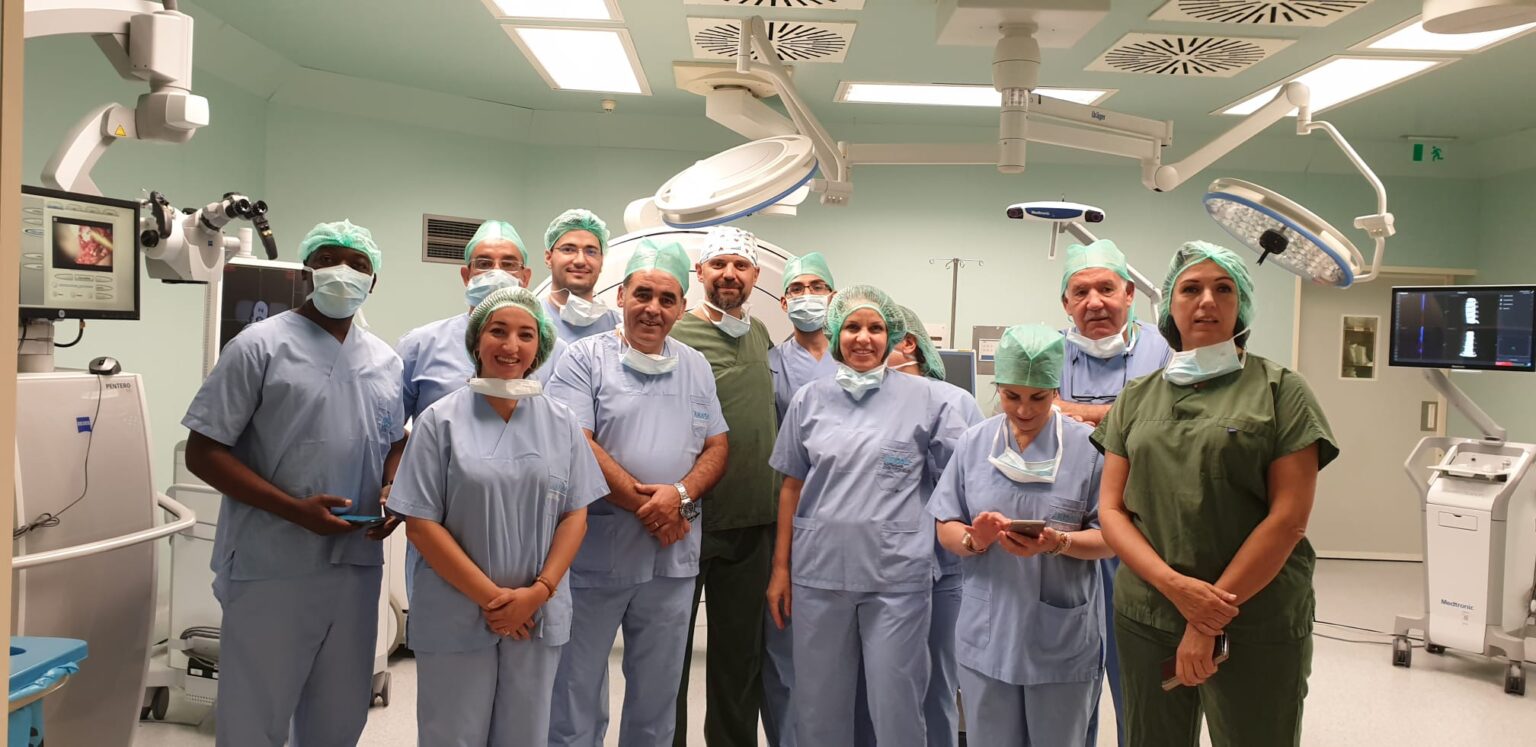
HYBRID OR
Spine fractures can be treated with higher success and lower complication rates in hybrid operating room conditions. Hybrid operating rooms, as they are known, are new generation operating rooms where devices and state-of-the-art technologies such as O-ARM CT (tomography), nöro-navigation system, new generation fluorescent filtered microscope, intraoperative nöromonitörization are used. Patients can be discharged in a short period of 3-5 days without staying in intensive care.
- Rehabilitation: After treatment, rehabilitation should begin as prescribed by the doctor. Physiotherapy and exercises help to strengthen the spine, increase its flexibility and restore its normal function. In severe fractures, the patient can return to normal life in 2-3 months. In paralyzed patients, there is a longer rehabilitation period.
- Complications in Spine Fractures:
- Spinal Cord Injury: Spinal fractures can cause spinal cord injury. In this case, the treatment plan will aim to protect and heal the spinal cord.
- Infection: There may be a risk of infection after surgical intervention. It can be used in comminuted and comminuted fractures. During the recovery period, it is important to monitor the suture sites and the general state of health.
- Long-term effects: Long-term problems such as low back pain, restricted mobility or spinal deformities may occur after spinal fractures. For this reason, regular medical check-ups and compliance with the recommendations are important.
- &Prevention: It is important to take safety precautions to avoid spinal fractures. Especially in work accidents, driving carefully in traffic, using appropriate protective equipment while playing sports and taking steps to prevent falls can reduce the risk.
When diving into the sea and water, do not jump in unless the depth is known. In postmenopausal women, the level of bone resorption should be checked regularly. Their daily calcium and vitamin D needs should be met.
Since spinal fractures are serious and complex injuries, accurate information from a doctor and an appropriate treatment approach are crucial. It is therefore important to seek medical attention as soon as possible in the event of a fracture.
Frequently Asked Questions
Q1. What is a spinal fracture?
A spinal fracture is a serious injury resulting from the fracture of one or more of the bones that make up the spine. Trauma, osteoporosis, infections, or tumors can cause these fractures.
Q2. What are the symptoms of a spinal fracture?
The most common symptoms of spinal fractures are sudden onset of severe back, lower back, or neck pain, limited range of motion, numbness, tingling, and muscle weakness. If the spinal cord is affected, more serious symptoms such as paralysis may occur.
Q3. How is a spinal fracture diagnosed?
Diagnosis is made after a physical examination by a physician, using imaging methods such as X-rays, computed tomography (CT), and magnetic resonance imaging (MRI). Additional tests may be performed if necessary.
Q4. Can spinal fractures be treated without surgery?
Yes. In mild and stable fractures, non-surgical follow-up is possible with rest, brace use, medication, and physical therapy. However, the treatment plan is different for each patient.
Q5. When is spinal fracture surgery necessary?
Surgical treatment is considered if the fracture is unstable, causes spinal cord or nerve compression, causes severe pain, or leads to neurological deficits.
Q6. How is spinal fracture surgery performed?
During surgery, the fractured area is stabilized and pressure on the nerve is relieved. If necessary, the spine can be fixed with screw, plate, or rod systems. In some patients, bone cementation (vertebroplasty/kyphoplasty) methods may also be applied.
Q7. Is spinal fracture surgery risky?
As with any surgical procedure, there are certain risks. However, these risks can be reduced with modern surgical techniques and appropriate patient selection.
Q8. What is the recovery process like after a spinal fracture?
The recovery time varies depending on the type of fracture and the treatment applied. Many patients can gradually return to their daily lives after treatment. The rehabilitation process plays an important role in recovery.