Oncology
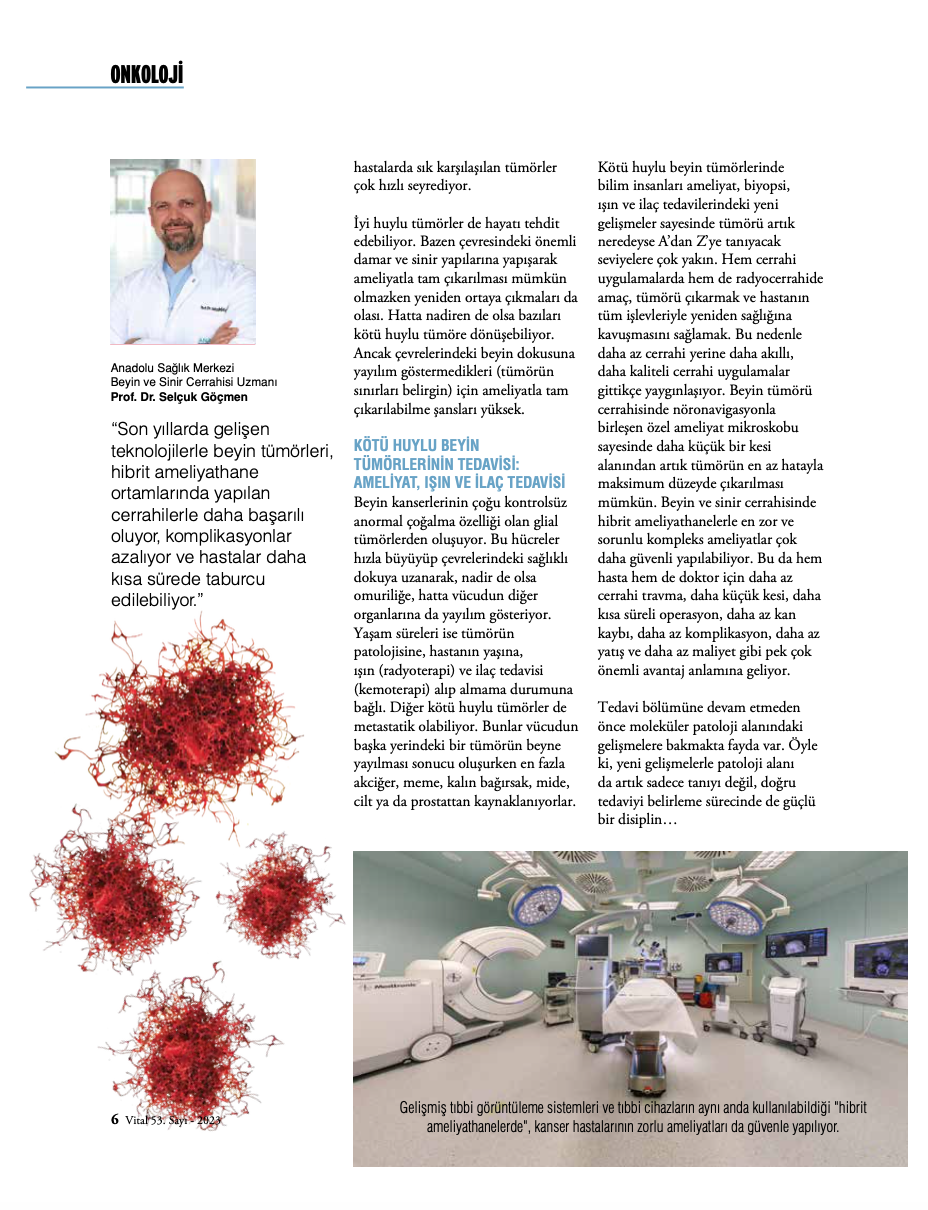
Brain and Neurosurgery Specialist Prof. Dr. Selçuk Göçmen stated that with the developing technologies in recent years, brain tümörs have given more successful results with surgeries performed in hybrid operating room environments, complications have decreased and patients can be discharged in a shorter time.
Brain tümörs are among the tümörs that are frequently encountered in patients and can often progress rapidly. Benign tümörs can also be life-threatening from time to time. Some benign tümörs may not be completely removed by surgery by adhering to moist vascular and nerve structures in their stage and may reappear. Even in rare cases, some benign tümörs can be transformed into benign tümörs. However, the chances of complete surgical removal are higher in tümörs with clear borders that do not spread to the brain tissue in its stage.
Treatment of Cötü Benign Brain Tümörs:
Surgery, Radiation and Ilaç Treatment
The majority of brain cancers are caused by glial tumors with uncontrolled and abnormal growth. These cells can grow rapidly and extend to surrounding healthy tissues, and in rare cases, they can spread to the spinal cord or other organs of the body.
Life expectancy varies depending on the pathology, age, radiotherapy and chemotherapy. Benign brain tumors can be metastatic. These types can occur as a result of the spread of cancer elsewhere in the body to the brain. The most common types of metastatic spread are lung, breast, colon, stomach, skin and prostate.
In malignant brain tumors, thanks to advances in surgical techniques, biopsy methods, radiation and drug treatments, it is now possible to control the tumor. The aim of the treatment is to remove the tumor in the most effective way possible and to maintain the patient's quality of life.
The nöronavigation systems and special operating microscopes used in brain tümörürü surgery allow the tümörürü to be removed with minimal errors and at maximum level through smaller incisions. Thanks to hybrid operating rooms, complex surgeries that were previously considered very difficult and risky can now be performed in a much more secure way.
These methods provide significant advantages such as less surgical trauma, shorter operation time, less blood loss, fewer complications, shorter hospitalization time and lower costs.
Developments in the field of molecular pathology have also made a major contribution to the treatment process. Nowadays, pathology results are guiding not only to make a diagnosis but also to determine the right treatment. In this way, personalized, more rational and more effective treatment plans can be created.