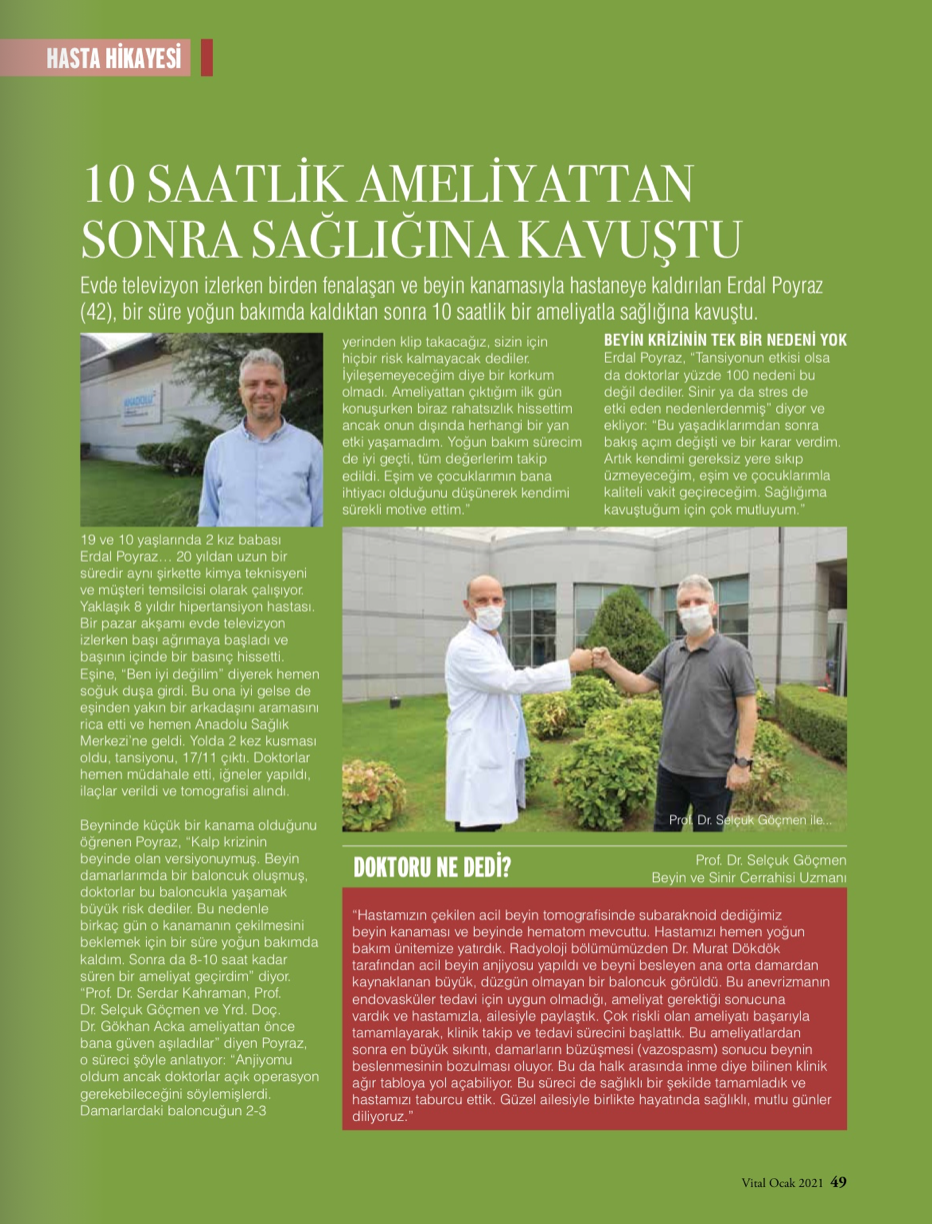
He regained his health after 10 hours of surgery
A 42-year-old patient was hospitalized after suddenly collapsing while watching television at home. The patient, who was diagnosed with brain hemorrhage in the first evaluations, was followed up in intensive care for a while and then recovered after a 10-hour surgery.
The patient described her experience as follows:
“Suddenly I started to have a severe headache. In a short period of time, I realized that I was not feeling well. I went to the hospital and the tests showed that I had a bleeding in my brain.”
The intensive care process and the decision to operate
Examinations revealed a massive hemorrhage in the brain and a vascular bubble causing it. Doctors closely monitored the patient in intensive care to prevent the bleeding from progressing and to eliminate the risk to life.
Stating that surgery was decided due to the seriousness of the situation, the patient said, “The doctors explained the process to me clearly and clearly. They told me that I needed surgery. "I accepted and accepted," he said.
“After the surgery, it was not what I feared”
Stating that he felt a slight discomfort in the first days after the operation, which lasted about 10 hours, but otherwise did not have any serious problems, the patient stated that the intensive care and service process was closely monitored.
The patient said, “I had some difficulty speaking after the surgery, but I recovered in a short time. Everything progressed in a controlled manner. My family and my children were the biggest motivation for me."
No single cause of brain crisis
Selçuk Göçmen, Neurosurgery Specialist Selçuk Göçmen emphasized that brain hemorrhages are not due to a single cause and shared the following information:
“Brain hemorrhages can be caused by many factors such as high blood pressure, stress, problems related to vascular structure and aneurysms. Early diagnosis and rapid intervention are vital in such patients.”
What did his doctor say?
Selçuk Göçmen stated that the patient's emergency brain tomography revealed subarachnoid hemorrhage and hematoma in the brain. He stated that in the further investigations, a vascular bubble with an irregular structure was detected in one of the main vessels feeding the brain.
Stating that a successful surgery was performed with open surgery in this case where endovascular treatment was not suitable, Göçmen said that the patient was closely monitored against the risk of vasospasm (vasospasm) in the brain vessels in the postoperative period.
“We survived this process without any problems and discharged our patient in good health. He is able to return to his daily life."
A new life after surgery
Stating that she changed her life habits after this period, the patient said, "I pay more attention to my health now. I get used to not having unnecessary stress and spend more quality time with my family. I am very happy to regain my health again."