
Inability to smell may indicate brain diseases
A problem with smell is a complaint that many people experience and is often thought of as an ordinary condition. However, this may also be an early sign of some brain diseases. It is emphasized that a decrease or loss of the sense of smell should not be neglected.
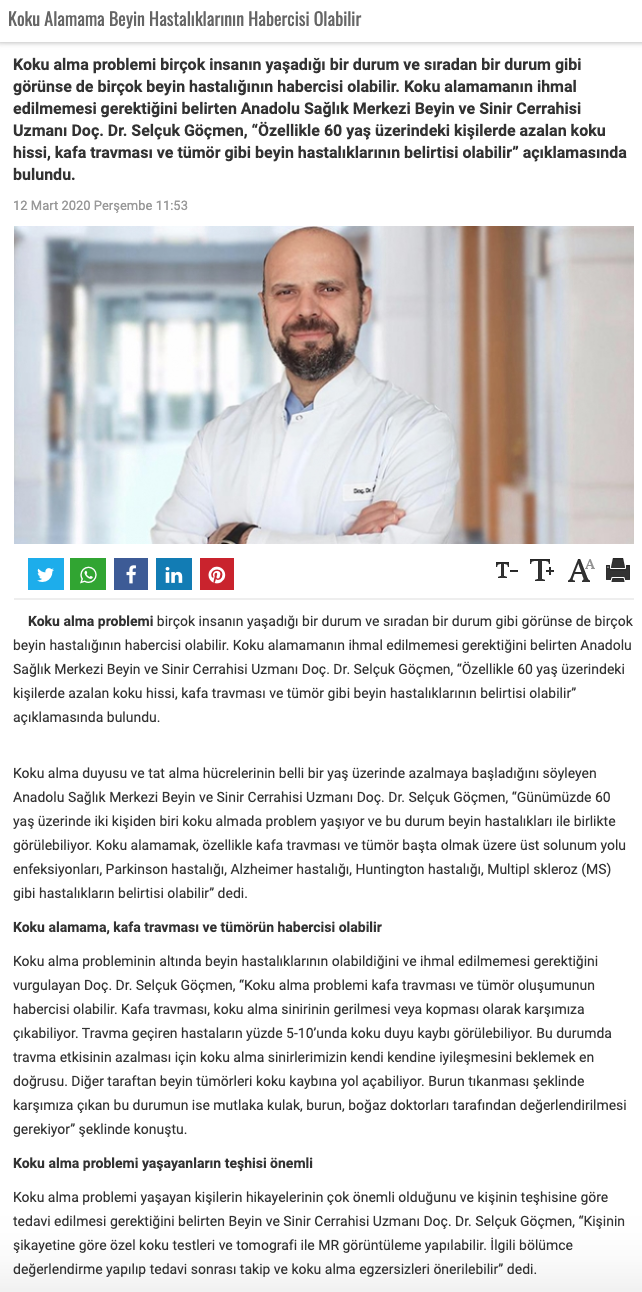
Selçuk Göçmen, Neurosurgery Specialist Selçuk Göçmen, states that decreased sense of smell, especially in people over the age of 60, may be a symptom of brain diseases such as head trauma and tümör.
Stating that the olfactory and taste buds begin to decline after a certain age, Göçmen, günümüzde, 60 years old ühe says that olfactory problems can be seen in many people and that this condition can occur with some brain diseases.
It is stated that the inability to smell can be a symptom of diseases such as head trauma and tümörs, as well as respiratory infections, Parkinson's disease, Alzheimer's disease, Huntington's disease and Multiple Sclerosis.
Inability to smell may be a sign of head trauma and tümörün
Selçuk Göçmen states that brain diseases may be underlying olfactory problems and this should be taken seriously. He states that loss of smell may develop as a result of stretching or rupture of the olfactory nerve after head trauma.
Stating that the sense of smell may be permanently lost in some patients who have suffered trauma, while some may experience partial recovery over time, Göçmen said that regular follow-up and patience should be taken in this process;Stating that it is possible to be treated, Göçmen emphasizes that it is important to have regular follow-up and patience in this process.
Stating that brain tümörs can also cause loss of smell, Göçmen said that odor problems that occur with nasal congestion should be evaluated by ear, nose and throat specialists.
It's important to diagnose those with olfactory problems
Stating that people with olfactory problems should be evaluated in detail, Selçuk Göçmen states that special odor tests can be performed according to the patient's öyküsü. If necessary, tomography and magnetic resonance imaging methods can be utilized.
Paying attention to the importance of appropriate treatment planning according to the diagnosis, regular follow-up after treatment and olfactory exercises, Göçmen emphasizes that the olfactory problem should not be seen as a simple complaint.